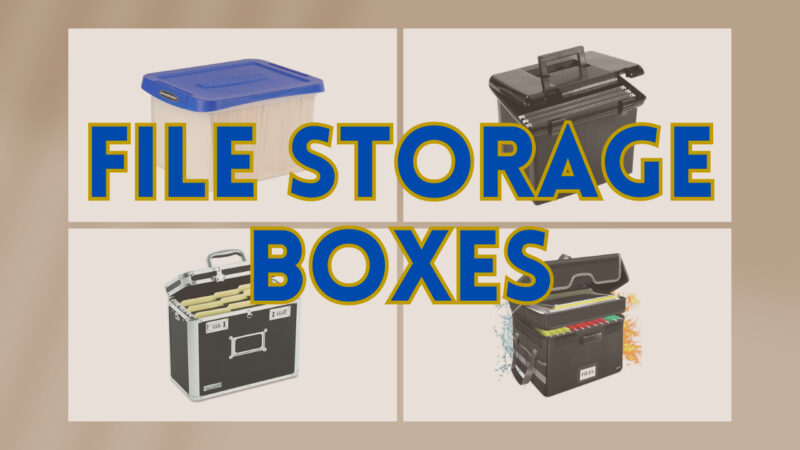
Organizing paperwork efficiently is important for businesses, schools, and home offices that handle large amounts of documentation every day. Without proper storage solutions, files can become damaged, misplaced, or difficult to access when needed. File storage boxes provide a practical way to protect documents while improving organization and workspace efficiency. Available in different sizes and capacities, these boxes are commonly used for archiving records, storing administrative paperwork, and simplifying document management processes.
Choosing the Right Size and Capacity

File storage boxes are designed to accommodate different types of documents and storage requirements. Some are compact for personal use, while others are built to hold large quantities of files for commercial environments. Choosing the correct size depends on the volume of paperwork, available storage space, and how often the documents need to be accessed.
Many offices use a file box for administration management because it helps organize contracts, invoices, employee records, and other essential paperwork in a structured way. Boxes with larger capacities are especially useful for archiving older documents that must be retained for legal or operational reasons. Smaller boxes, on the other hand, are ideal for frequently accessed files that need to remain within easy reach.
Durability is another important factor. Strong cardboard, plastic, or reinforced storage boxes can better protect documents from damage caused by handling, dust, or moisture. Stackable designs also help maximize office storage efficiency without creating clutter.
Practical Benefits in Offices and Administrative Spaces
File storage boxes help create a more organized and productive work environment. Employees spend less time searching for paperwork when files are properly categorized and labeled. This improved organization supports smoother daily operations and reduces the risk of losing important information.
Administrative departments often manage sensitive records that need to be stored securely for long periods. Organized storage systems make it easier to retrieve documents during audits, meetings, or compliance reviews. Proper labeling and categorization also support faster document tracking and inventory management.
Another advantage is improved workspace cleanliness. Storing inactive files inside dedicated boxes frees up desk space and reduces visual clutter throughout the office. This creates a more professional and efficient environment for employees and visitors alike.
Long Term Storage and Document Protection

Long term document storage requires solutions that can protect files from deterioration over time. Quality storage boxes help shield paperwork from light exposure, dust accumulation, and accidental damage during handling or relocation.
Businesses that maintain physical records for legal, financial, or historical purposes often rely on structured storage systems to preserve important information. Properly organized boxes also simplify future archiving or digitization projects because documents remain categorized and accessible.
Portable storage boxes can also be useful during office relocations or temporary workspace changes. Handles, secure lids, and reinforced designs make transporting documents safer and more convenient while reducing the risk of misplaced files.
Conclusion

File storage boxes remain one of the most practical solutions for organizing and protecting documents in administrative and professional environments. By choosing the right size, capacity, and material, businesses can improve efficiency, reduce clutter, and support long term document preservation.
Whether used for daily office organization or large scale archiving, reliable storage systems help ensure important paperwork remains secure, accessible, and properly managed over time.